Coefficient of Friction Testing for Flexible Packaging: Why Surface Friction Matters
Introduction
Packaging film has many jobs. It protects the product, seals closed, carries printing, and has to run smoothly through the machines that make and fill packages. How well it runs depends a great deal on one surface property: how easily the film slides against itself and against machine parts. That property is measured as the coefficient of friction, or COF.
COF testing is a routine check in film factories and quality labs, but the numbers are easy to misread. A result changes with the test method, the surfaces tested, the age of the film, and how it was stored. This article explains what COF means, why it matters for packaging film, how slip additives control it, which standards describe the test, and how to choose a tester.
In this article:
- What the coefficient of friction measures
- Why surface friction matters in packaging film
- Slip additives and how they move
- The test standards: ISO 8295, ASTM D1894 and GB/T 10006
- How a friction test works and what changes the result
- Reading results, solving problems and keeping good records
- How to choose a coefficient of friction tester
What the Coefficient of Friction Measures
The coefficient of friction is a simple ratio with no units. It compares the force that resists sliding with the force that presses two surfaces together. A higher number means the surfaces grip each other more. A lower number means they slide more easily.
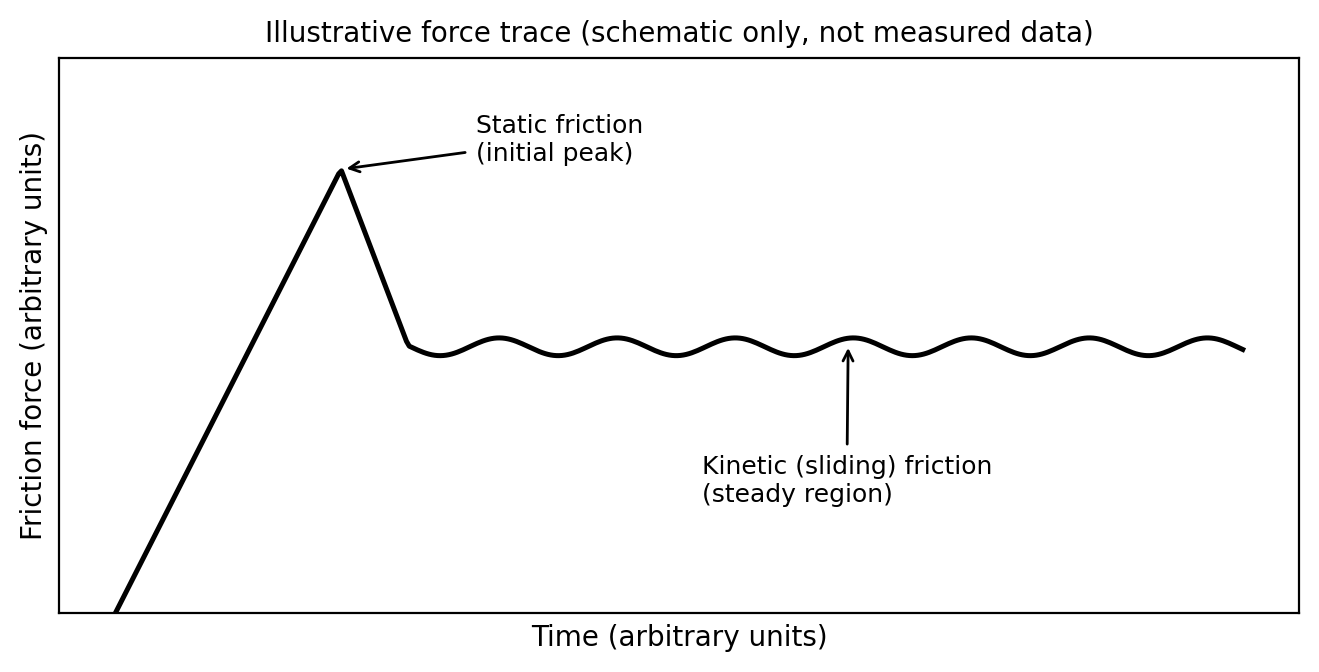
Film is usually given two values. The static value describes the push needed to start sliding. The kinetic value describes the push needed to keep sliding once movement has begun [1][2].
Different documents use different names for the second value. ISO 8295 says sliding friction [1], ASTM D1894 says kinetic friction [2], and the Testshine product page says dynamic friction [12]. All three mean the same thing, and this article uses the word kinetic.
Why two values?
The static value matters at the moment motion starts, for example when a roll begins to unwind or when film restarts after a pause. The kinetic value matters while the film is running steadily. Because they describe different moments, record and judge them separately.
Which two surfaces are tested?
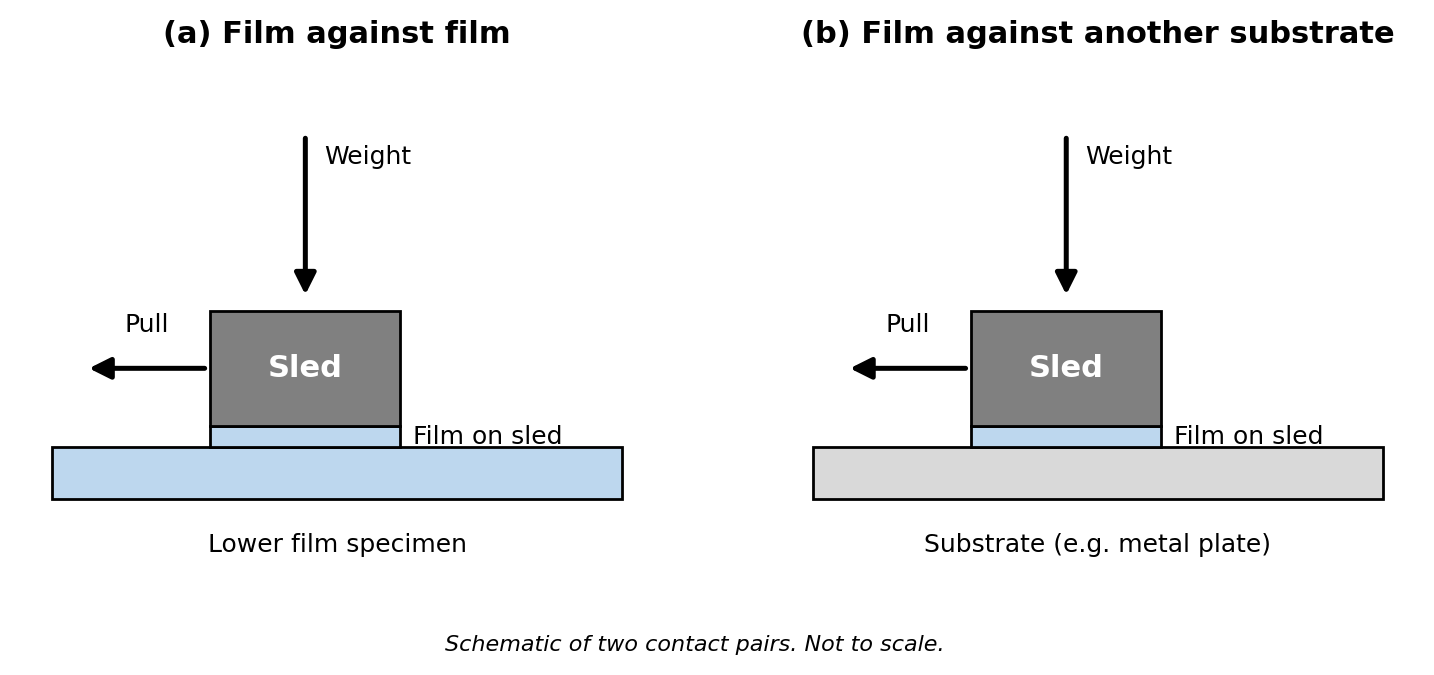
Both ISO 8295 and ASTM D1894 cover film sliding against itself or against another material [1][2]. Film against film shows how layers behave on a roll or inside a package. Film against metal shows how the film behaves on machine parts. Choose the pair of surfaces that matches the question you need to answer.
Why Surface Friction Matters in Packaging Film
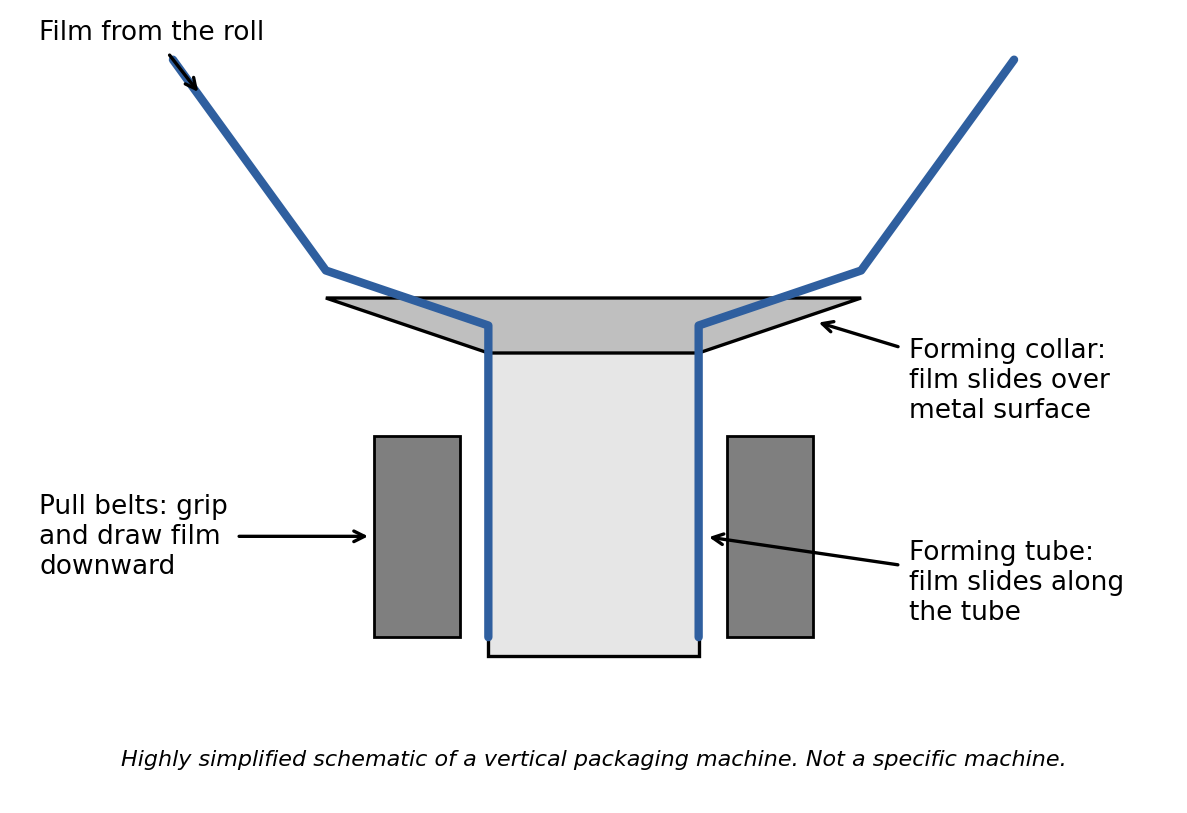
Many packages are made on machines that pull film off a roll, shape it into a pouch, fill it, and seal it. Some machines work vertically and others horizontally. Each step asks something different of the film. On a vertical machine, the film must slide easily over the metal collar and tube that shape it [9].
Too much friction causes trouble
Industry presentations list the typical problems. On a horizontal machine, film with too much friction on its sealing side can drag or jam as it moves over metal plates. On a vertical machine it can feed badly over the forming collar, produce packages of uneven size, and squeal [10]. Wrinkling, bunching, and printed artwork drifting out of position are also linked to film that does not suit the machine [9].
Lower friction is not always better
After the package is shaped, belts grip the film and pull it downward. The film therefore needs to slide freely over the forming parts yet still be held well by the belts [9]. This means one surface of a film can need a different friction level than another, and a single number cannot describe the whole film. The same source adds that what a film needs also depends on how the machine moves and how fast it runs [9].
Friction matters before the packaging line
Film passes through many steps before it is filled with product, including printing, coating, laminating, slitting, rewinding, and packaging itself [10]. Controlling friction is described as helping processors avoid problems when forming, moving, and storing packages [10].
Rolls show the effect clearly. A patent about polypropylene film explains that slip additives are standard practice because they stop neighboring layers on a roll from sticking, so the film unwinds easily. It adds that without a slip additive, the layers grip so strongly that smooth unwinding is almost impossible [11]. This is background text in a patent, not a controlled study, but it explains why slip additives are used.
Slip Additives and How They Move
Film makers usually adjust friction by mixing a slip additive into the plastic. These additives do not blend in fully, so over time they travel to the surface of the film [10]. Two common types are fatty acid amides called erucamide and oleamide [6]. Erucamide is described as very widely used, and its arrival at the surface lowers friction [8].
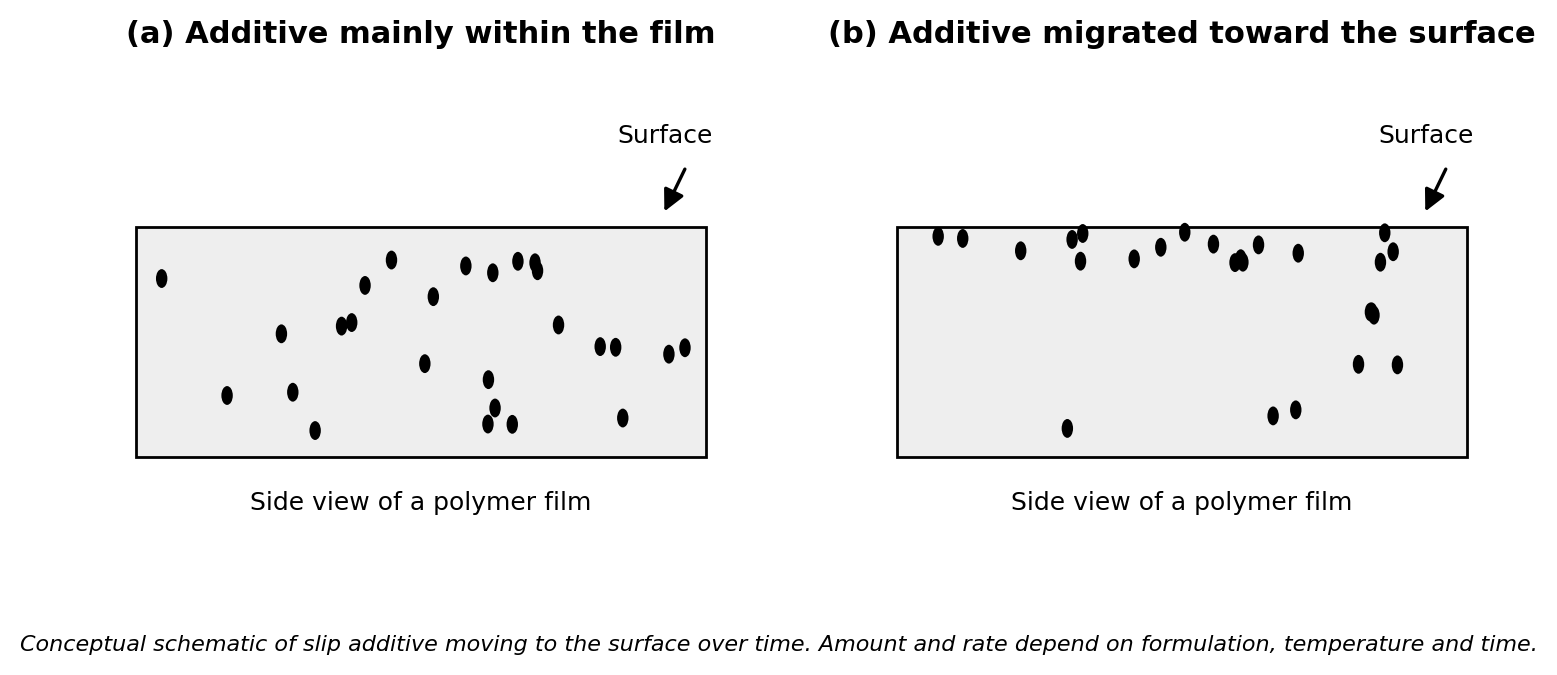
This is why the friction of a film is not fixed on the day it is made. The movement takes time, and the amount that reaches the surface has been reported to depend on the plastic, the film thickness, the temperature, and the time on the shelf [8]. Film containing erucamide has also been reported to lose friction performance after exposure to high temperatures, such as in hot trucks or warehouses [7].
Additives that stop layers sticking
Slip movement needs to be controlled so packaging quality stays steady. A peer reviewed study on polyethylene film compared three mineral additives, talc, natural silica, and synthetic silica, used together with erucamide. Synthetic silica, which has smaller particles and a higher silica content, gave better friction results and held back the movement of erucamide to the surface [6]. The study also measured haze, which shows that an additive choice can affect more than one property [6].
What this means for planning tests
Because the surface keeps changing, the same film can give different results at different ages or after different storage. ASTM D1894 warns that some films are sensitive to age and surface condition, and that comparing films made at different times may be meaningless unless the effect of aging is what you want to study [2]. A test report that leaves out film age and storage conditions is incomplete.
The Test Standards: ISO 8295, ASTM D1894 and GB/T 10006
ISO 8295
ISO 8295 (1995 edition) sets out a method for finding the starting and sliding friction of plastic film and sheet sliding against itself or another material. ISO says the method is mainly meant for quality control and does not give a full picture of how well a film runs on machines. ISO lists this edition as current [1].
ASTM D1894
ASTM D1894 (2024 edition) covers the same basic quantity: the static and kinetic friction of plastic film and sheet sliding against itself or another material, under specified test conditions [2]. Older editions, including the 2014 edition, have been withdrawn, so a lab should check which edition its procedures name [3].
GB/T 10006
For labs in China, or labs serving customers there, the national standard is GB/T 10006 (2021 edition). It is listed as current, took effect on 1 October 2021, and applies to plastic film and sheet that does not stick to itself, up to 0.5 mm thick [4]. It is a word for word adoption of ISO 8295 (1995 edition) and replaced the 1988 edition [5].
The methods are not interchangeable
ASTM D1894 states that it is not equivalent to ISO 8295 and that results from the two cannot be compared directly [2]. Always report which method and edition you used, and do not mix results from different methods. Customers sometimes require one method with changes, so check the governing specification first.
| Standard | What it covers | Key point |
|---|---|---|
| ISO 8295 (1995 edition) | Starting and sliding friction of plastic film and sheet against itself or another material. Listed as current [1]. | Mainly for quality control, not a full test of machine performance [1]. |
| ASTM D1894 (2024 edition) | Static and kinetic friction of plastic film and sheet against itself or another material. Current edition [2]. | Not equivalent to ISO 8295, so results cannot be compared directly [2]. |
| GB/T 10006 (2021 edition) | Plastic film and sheet that does not stick, up to 0.5 mm thick. Current [4]. | Word for word adoption of ISO 8295 (1995 edition) [5]. |
Table 1. The main friction standards for plastic film and sheet.
This table gives the scope and status of each standard. Settings such as sled weight, contact size, sliding speed, sample size, and conditioning differ between methods and editions. Take them from the current full text of the standard your work follows, not from brochures or summaries.
How a Friction Test Works
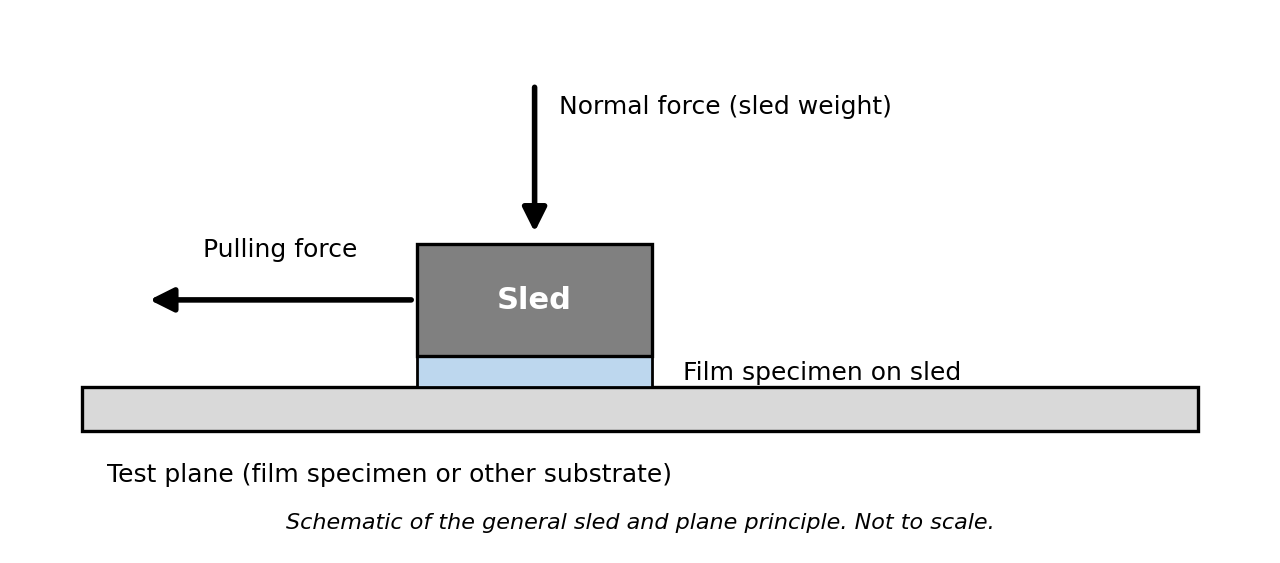
In the basic method, a weighted block called a sled carries one sample and moves against a flat surface that holds the other sample or material. A force sensor records how hard the sled resists. The test is repeated and the results are averaged, as the standard directs.
From force reading to coefficient
The record of force shows a peak as the sled starts to move. That peak gives the static value. The steadier reading after it gives the kinetic value. Each coefficient equals the friction force divided by the weight of the sled, written as μ = F / (m × g).
A worked example with made up numbers
Suppose the sled has a mass of 0.200 kg. Its weight is 0.200 × 9.81, which is about 1.962 N. If the average sliding force were 0.40 N, the kinetic coefficient would be 0.40 ÷ 1.962, or about 0.20. These numbers only show the arithmetic. They are not required test settings and do not describe any real film.
What Changes the Result
ASTM D1894 itself explains why friction data on film need careful handling. Table 2 lists those points along with related findings from the research on additives.
| Factor | Why it matters | Source |
|---|---|---|
| Smooth, even movement | Friction depends on how evenly the two surfaces move against each other, so the movement should be controlled as carefully as possible. | [2] |
| Age and surface condition of the film | Some films give results that depend on age and surface condition, and additive reaching the surface takes time. Films made at different times may not be comparable unless aging is the subject of the study. | [2] |
| Uneven additive on the surface | Additive may not spread evenly over the film, which can limit how repeatable the values are. | [2] |
| How and where the film was made | Films from different processes or machines can have different surfaces. | [2] |
| Speed of the recorder | The recorder must be fast enough to follow the force signal. | [2] |
| Storage temperature | Heat has been linked to weaker friction performance in polyethylene film containing erucamide. | [7] |
| Additive package | The choice of slip and antiblock additives can change friction and how additives move. | [6] |
Table 2. Factors that influence film friction results.
Handling the samples
As a general rule of good lab practice, hold samples by the edges, keep them clean and flat, test the surface that matters for your use, and write down which side was tested. Take sample sizes and conditioning rules from the standard you follow.
Reading Results and Setting Specifications
No single friction value guarantees good performance on a machine. The right range depends on the method, the film, and the machine, and the film supplier and the user should agree on it. ISO 8295 itself says it does not give a full picture of machine performance [1], and machine needs vary with how the machine moves and how fast it runs [9]. A good specification names the method and edition, the pair of surfaces, the allowed range for static and kinetic values, and the film age at the time of testing.
What a friction test cannot tell you
- It is a lab measure of surface behavior, not a direct measure of how well film runs on a machine [1].
- Results from different methods or editions cannot be combined [2].
- A result describes the film on the day of testing, and it can change as additives move [2][8].
Solving Problems on the Line
Friction testing is one useful tool among several. Table 3 pairs problems described in the sources with questions a lab can investigate. These are leads to follow up, not final diagnoses.
| Problem seen | Question to investigate | Source |
|---|---|---|
| Film drags or jams over metal plates on a horizontal machine | Is the friction of the sealing side against metal higher than in lots that ran well? | [10] |
| Poor feeding over the forming collar, uneven package size, or squealing on a vertical machine | Has the film to metal friction changed since the film was approved, for example through age or heat? | [7][10] |
| Bunching, creasing, or printing out of position | Do recent lots have the same static and kinetic values as earlier lots tested the same way? | [9] |
| Layers stick together or the roll unwinds badly | Is the friction between layers unusually high? Could the additive level or film age explain it? | [8][11] |
| Different results for batches made at different times | Were the films tested at the same age and after the same storage? | [2] |
Table 3. Linking line problems to friction questions.
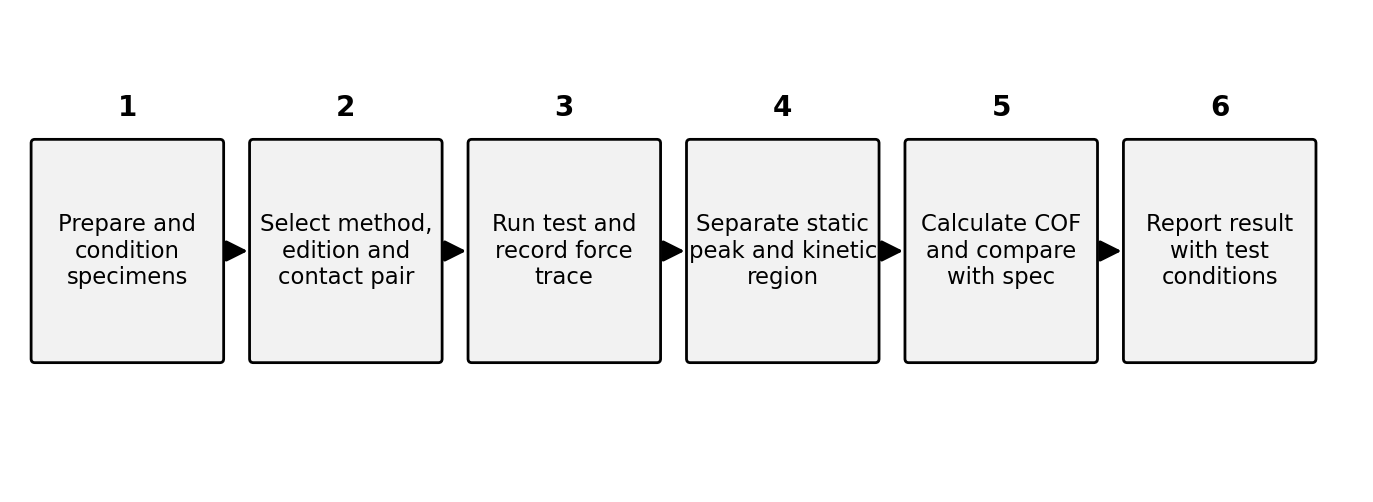
Good Practice and Test Records
These habits follow from the points above. They are general lab practice and do not replace the standard you work to.
- Use the method and edition named in your specification, and do not mix methods [2].
- Write down film age and storage conditions, because additives move over time [2][8].
- Check that the instrument moves smoothly and that its calibration is up to date [2].
- Report static and kinetic values separately.
| Record this | Why |
|---|---|
| Standard and edition | ISO 8295 and ASTM D1894 are not equivalent, so results only compare within one method [2]. |
| Surface pair and side tested | Film against film and film against another material answer different questions. |
| Film name and age | Additive reaches the surface over time [2][8]. |
| Storage before testing | Heat has been linked to changed friction performance [7]. |
| Instrument and settings | Smooth movement and recorder speed affect the data [2]. |
| Static and kinetic values | They describe different stages of sliding. |
| Operator and date | Allows the result to be traced later. |
Table 4. What to include in a friction test record.
How to Choose a Coefficient of Friction Tester
The right instrument depends on the standard you work to and the materials you test. Table 5 lists the main points to check.
| What to check | What to ask |
|---|---|
| Method | Which standard and edition your customers or your own specification require. Ask the supplier which methods the instrument is designed for and request a written statement. |
| Force range and detail | Does the range suit the forces you expect, and is the reading fine enough to show the differences you care about? |
| Speed control | How well is sliding speed set and held? Even movement matters [2]. |
| Sled and test surface | Sled weight and contact size, and whether the instrument can test film against film and film against other materials. |
| Sample range | The types of film, foil, or laminate it accepts and its thickness limit. GB/T 10006 (2021 edition) and ISO 8295 address film up to 0.5 mm thick [4][5]. |
| Temperature | Do you need heated testing, and how is it provided? |
| Calibration | How is the force reading calibrated and how is that recorded? |
| Data | What display, software, and data export do you need for your quality system? |
Table 5. Points to check when choosing a tester.
Care and Safe Use
Keep the test surfaces and samples clean and hold film by its edges, because dirt or finger marks can change the reading. Follow the maker's manual for cleaning, calibration, and safety. This article gives no service intervals because they depend on the instrument and on your quality system.
- Calibrate the force reading with the maker's method and keep the records.
- Check that the test table is level and that the sled and surface are clean before each series of tests.
- Train operators so that sample preparation and test conditions stay the same every time.
Frequently Asked Questions
Are kinetic, sliding, and dynamic friction different?
No. Documents use different words for the same value. ISO 8295 says sliding [1], ASTM D1894 says kinetic [2], and the Testshine product page says dynamic [12].
Which standard should I use?
Use the one your customer or your own specification names. GB/T 10006 (2021 edition) is a word for word adoption of ISO 8295 [5], while ASTM D1894 is not equivalent to ISO 8295 [2].
Can I test film against metal?
Yes. Both ISO 8295 and ASTM D1894 cover film sliding against itself or another material [1][2]. Choose the material that matches the real contact on your line and name it in the report.
How soon after production should film be tested?
There is no single answer. Additive reaches the surface over time [2][8], so your specification should state the film age at which friction is measured.
Does a good friction result guarantee good machine performance?
No. ISO 8295 says it does not give a full picture of how well film runs on machines [1]. Friction is one of several film properties that affect running on the line [9].
Conclusion
Friction links the surface chemistry of a film to how it behaves on a machine. A result reflects the plastic, the additives, the age and storage of the film, and the way the test was done. When it is reported together with its method, edition, surface pair, and film history, a friction value is a practical tool for comparing lots, agreeing specifications, and investigating problems. It should not be treated as a complete prediction of machine performance.
Relevant Testshine Product
Testshine TS-CFT1 Coefficient of Friction Tester
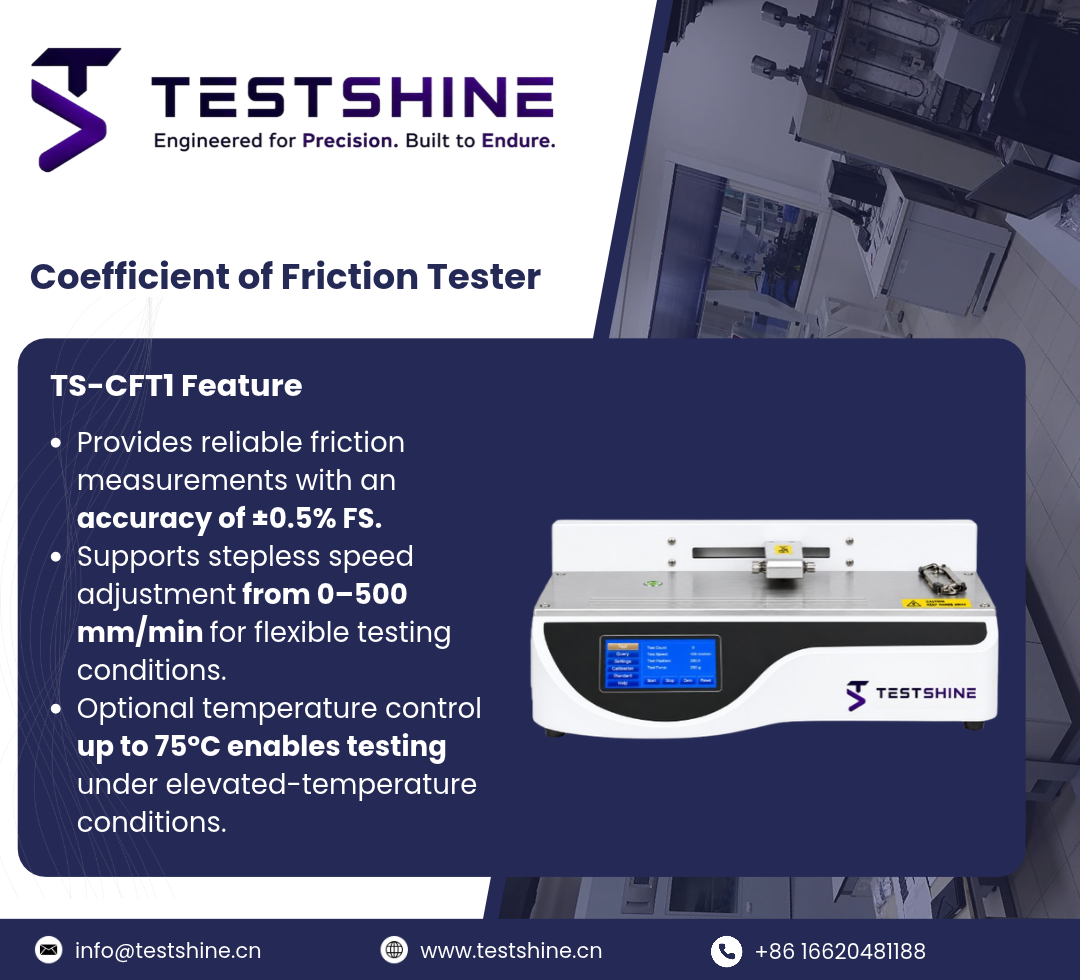
Reliable friction testing starts with an instrument that measures force and movement consistently. The Testshine TS-CFT1 is designed to check how easily two surfaces slide against each other, which helps assess how smooth packaging film is and how easily it opens [12].
Why it may suit your work:
- Measures static and dynamic friction coefficients and peel strength on plastic films, composite films, aluminum foils, aluminized films, plates, rubber, and ceramics [12].
- Coefficient range 0.001 to 0.999, force range 0 to 10 N, resolution 0.001, and accuracy of ±0.5% of full scale [12].
- Sliding speed from 0 to 500 mm per minute, continuously adjustable, with travel of 0 to 150 mm, sample thickness up to 2 mm, and optional heating from room temperature to 75 °C [12].
- 200 g ±2 g slider (63 mm × 63 mm, or 63.5 mm × 63.5 mm for the American standard), a live display of static and dynamic values, and a dedicated standard block for calibrating the force sensor [12].
The design draws on GB, ISO, and ASTM test standards. To discuss which method, edition, and setup suit your films, contact the Testshine team.
References
-
ISO, ISO 8295 (1995 edition), the international standard on determining the coefficients of friction of plastic film and sheeting. View online
-
ASTM International, ASTM D1894 (2024 edition), the standard test method for static and kinetic coefficients of friction of plastic film and sheeting, 2024. View online
-
ASTM International, ASTM D1894 (2014 edition), withdrawn in 2023. View online
-
National Digital Library of Standards, China, catalog entry for GB/T 10006 (2021 edition), issued 9 March 2021 and effective 1 October 2021. View online
-
ChineseStandard.net, excerpt of GB/T 10006 (2021 edition), identical to ISO 8295 (1995 edition) and replacing the 1988 edition. View online
-
L. A. Agustina, Y. D. Lestari, A. A. Adhinanda, M. N. Ariesta, J. Choi, Y. P. Prananto, and R. Febriani, Study of inorganic based anti blocks as migration control of slip additive on surface polyethylene monolayer film, ACA: Acta Chimica Asiana, volume 7, issue 1, 2024. View online
-
AVS 63rd International Symposium and Exhibition, conference abstract on erucamide migration in polyethylene films, paper AS WeA8, 9 November 2016. View online
-
AVS 53rd International Symposium, conference abstract on erucamide migration in polyolefin matrices, paper AS ThA1, 16 November 2006. View online
-
S. Anthony, Film criteria for vertical form fill seal applications, Packaging World, undated web article. View online
-
F. D'Annunzio, Bobst, presentation on converting flexible packaging and slip, Labelexpo Europe, 2019. View online
-
Canadian Intellectual Property Office, Canadian Patent 1284781, patent summary with background on slip agents in polypropylene film. View online
-
Testshine, product page for the Coefficient of Friction Tester. View online
Related Posts
Mechanical and Seal Integrity Testing for Flexible Packaging: A Guide to Quality Assurance

Heat Seal Strength Testing: Ensuring Reliable Seals in Flexible Packaging

Tensile Strength and Elongation Testing for Flexible Packaging Films

Flexible Packaging Quality Control: Essential Testing Methods and Standards
Mechanical and Seal Integrity Testing for Flexible Packaging: A Guide to Quality Assurance
Heat Seal Strength Testing: Ensuring Reliable Seals in Flexible Packaging
Tensile Strength and Elongation Testing for Flexible Packaging Films