
Oxygen Transmission Rate (OTR): Why It Matters in Packaging Material Testing
Introduction
Oxygen transmission rate (OTR) measures how much oxygen gas passes through a packaging material over a set time and area. It is one of the main properties used to judge the barrier performance of plastic films, laminates, coated papers, rigid containers, and finished packages across the food, pharmaceutical, medical device, cosmetics, and electronics industries. Oxygen that gets into a package can cause oxidation, spoilage, and other damage to many products. Because of this, OTR testing is now a standard part of material qualification, quality control, and shelf life planning in packaging laboratories worldwide.
This article explains what OTR is, why it matters to manufacturers and laboratories, how it is measured, with particular attention to the coulometric sensor method, which standards govern the test, what factors affect results, and how testing professionals typically choose a method for their material and application. It is written for laboratory technicians, packaging engineers, quality control teams, product development groups, and technical decision makers who specify, run, or read oxygen barrier test results.
Understanding Oxygen Transmission Rate
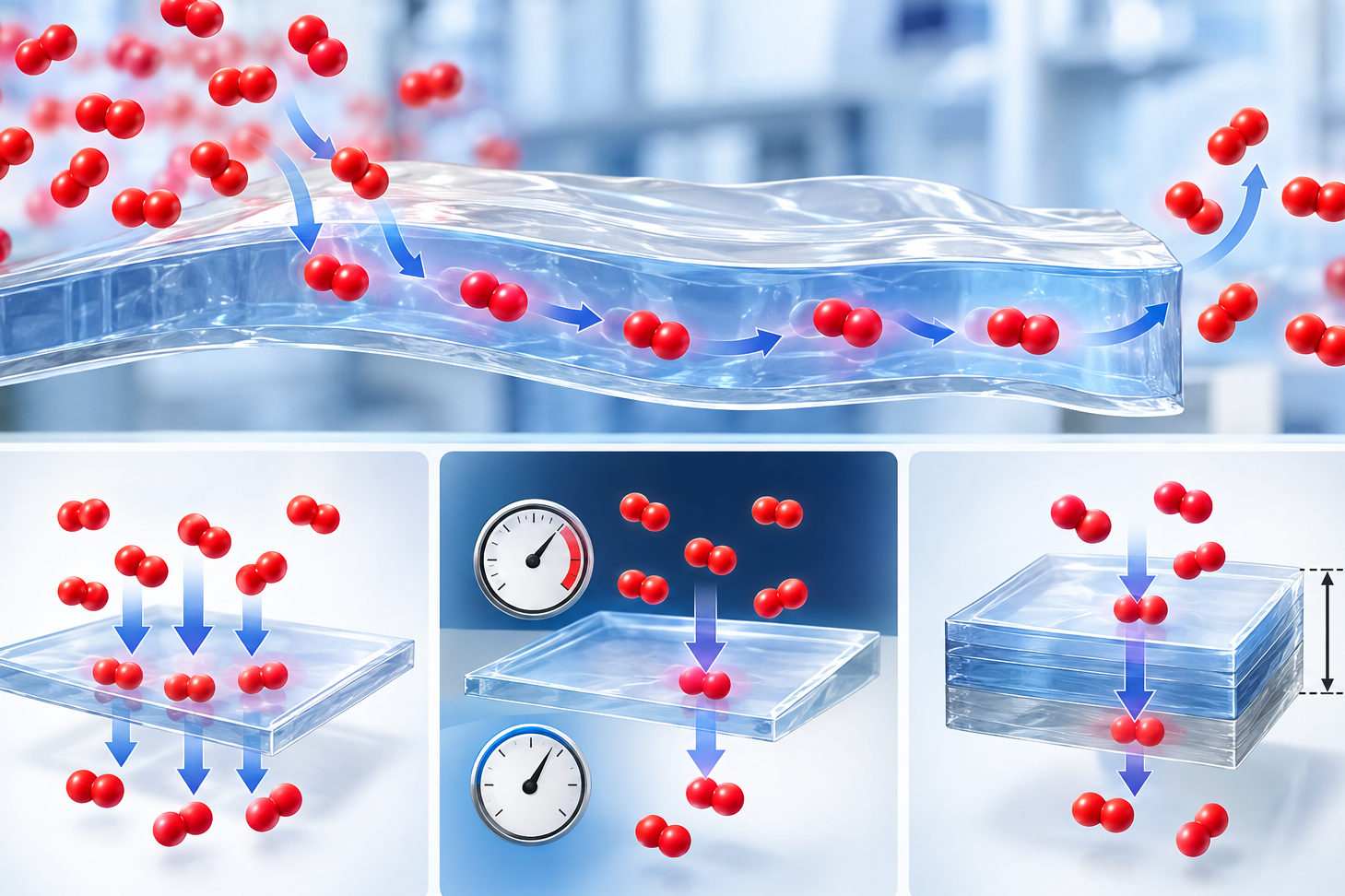
OTR measures the steady flow of oxygen gas through a barrier material once the material has reached a stable state. It is typically expressed in units such as cm³/(m²·day) or cc/(100 in²·day), under set temperature and relative humidity conditions [1]. A related but different value is oxygen permeability (or the permeability coefficient), which adjusts the transmission rate for a single unit of material thickness. This value is generally only meaningful for uniform, single layer films, since multilayer laminates do not let gas through in a way that scales simply with thickness [1].
Gas moves through a solid polymer film mainly by dissolving into the polymer and then diffusing through it. Oxygen molecules dissolve into the polymer on the side where oxygen concentration is high, move through the polymer toward the side where concentration is low, and then leave the material there. The steady rate measured in an OTR test reflects this combined process of dissolving and diffusing, specific to the polymer or laminate structure being tested.
Three related test results are commonly reported:
- Oxygen Transmission Rate (OTR): the volume of oxygen passing through a unit area of the test specimen per unit time, under set temperature and humidity conditions.
- Oxygen Permeance: OTR adjusted for a unit difference in oxygen partial pressure across the specimen, independent of specimen area.
- Oxygen Permeability Coefficient: permeance adjusted further for material thickness, which applies only to uniform single layer materials [1].
Why OTR Matters for Packaging Performance
Controlling how much oxygen enters a package is central to protecting the quality, safety, and useful life of many products. In food packaging, oxygen readily takes part in lipid oxidation, which leads to rancidity and a decline in taste, smell, and color. It also helps aerobic spoilage organisms grow [2]. Lowering the oxygen level inside a package, through barrier materials, controlled atmosphere packaging, or oxygen scavengers, is a common way to slow these reactions and extend shelf life [2][3].
Oxidation affects more than taste. It can break down valuable ingredients in food, contributing to loss of aroma compounds and vitamins, the formation of bad flavors, and structural changes from protein oxidation [4]. Because oxygen dissolved in food during processing is hard to remove completely, ongoing protection against oxygen entering through the package wall, across the full distribution period and shelf life of the product, becomes essential [4].
In pharmaceutical and healthcare packaging, oxygen sensitive active ingredients, biologics, and certain formulations need barrier packaging systems with known and controlled gas transmission properties. Compendial chapters cover part of this picture. USP General Chapter <671>, Containers, Performance Testing, provides moisture vapor transmission tests and a classification system for plastic packaging systems used for oral dosage forms [5]. Its tests measure moisture vapor transmission, not oxygen transmission, so oxygen barrier performance is measured separately, using methods such as ASTM D3985 or ASTM F1927 for films and laminates [1][6] and ASTM F1307 for finished dry packages [7], as called for in the product's own specification.
OTR also matters outside food and pharmaceuticals, including some electronics and solar panel encapsulation materials, where oxygen and moisture entering the material can damage sensitive components over the product's service life. In all these areas, OTR data supports material selection, formulation and structure design, supplier qualification, and ongoing quality assurance.
Test Methods for Measuring OTR
Several internationally recognized test methods exist for measuring OTR. They differ mainly in how the oxygen that passes through is detected and measured.
Coulometric Sensor Method (Equal Pressure Method)
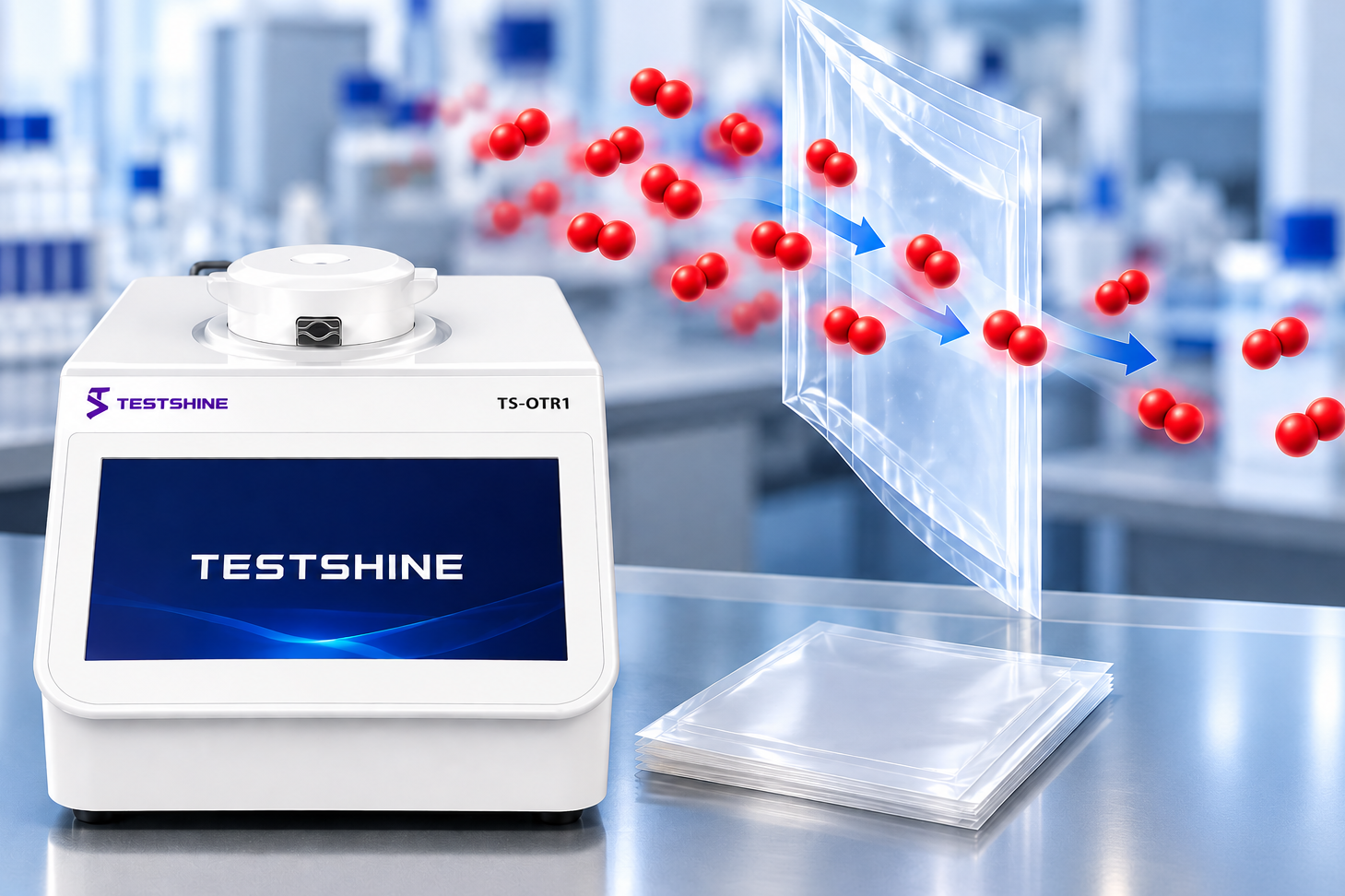
The coulometric sensor method is the most widely used approach for testing oxygen transmission in films, sheeting, and finished packages. In this method, a test specimen is sealed as a barrier between two chambers held at equal total pressure. One chamber receives the test gas (oxygen or air), while the other chamber is continuously flushed with an oxygen free carrier gas, typically high purity nitrogen [1]. Because both chambers stay at the same total pressure, oxygen moves across the specimen only because of the difference in oxygen partial pressure between the two sides. This is why the method is called the equal pressure method [8].
As oxygen molecules pass through the specimen, the nitrogen carrier gas carries them to a coulometric (electrochemical) sensor, which produces an electrical current in proportion to the rate of oxygen reaching it [1]. This current is converted into an OTR value once the system reaches a steady state. The coulometric sensor method is the basis for two closely related ASTM standards: ASTM D3985, used for testing under dry conditions (close to 0% relative humidity), and ASTM F1927, used for testing at controlled, higher relative humidity [1][6]. The same equal pressure principle appears in ISO 15105-2 [8], and similar national and regional methods include JIS K7126-2 (Japan), GB/T 19789 (China), and DIN 53380-3 (Germany).
A related standard, ASTM F1307, applies the coulometric sensor principle to whole, dry packages rather than flat film specimens, allowing testing of finished containers, pouches, and bottles in their intended sealed form.
Differential Pressure (Manometric) Method
The differential pressure method, standardized under ASTM D1434 and ISO 15105-1, empties the lower pressure chamber of the test cell and then adds the test gas to the higher pressure chamber, creating a set pressure difference across the specimen. Gas movement is then measured by tracking the pressure rise (or gas buildup) on the low pressure side over time. This method applies to a wide range of gases beyond oxygen and is often used for engineering plastics, rubber, and other materials in addition to packaging films.
Other Detection Methods
ASTM F2622 covers oxygen transmission testing using sensor technologies other than the coulometric detector, giving options where a different sensor type suits a given barrier range or application [9]. Another method, the ambient oxygen ingress rate (AOIR) approach, was developed as an alternative to coulometric testing for measuring the oxygen transmission rate of whole packages, and it can be used at realistic food storage temperature and humidity conditions [10].
Key OTR Test Parameters
| Test Parameter | What It Measures | Why It Matters |
|---|---|---|
| Oxygen Transmission Rate (OTR) | Volume of oxygen passing through a unit area of the specimen per unit time, e.g., cm³/(m²·day) [1] | Main indicator of a material's barrier performance under the stated test conditions |
| Oxygen Permeance | OTR adjusted for the oxygen partial pressure difference across the specimen | Allows comparison of barrier performance independent of the specific test gas pressure used |
| Oxygen Permeability Coefficient | Permeance adjusted further for specimen thickness (uniform materials only) [1] | Enables direct comparison of different thicknesses of the same uniform polymer |
| Test Temperature | Ambient or controlled temperature at which the test is run | Permeability of most polymers increases with temperature, so results must be reported along with test temperature |
| Relative Humidity (RH) | Moisture condition on one or both sides of the specimen during testing | Some barrier polymers (e.g., EVOH) are very sensitive to humidity; RH strongly affects measured OTR [11] |
| Steady State Time | Time needed for the transmission rate to settle before a valid OTR reading is taken | Ensures the reported value reflects equilibrium permeation rather than temporary conditioning effects |
Testing Procedure and Workflow
While exact instrument operation varies by manufacturer and test cell design, OTR testing under the coulometric sensor method generally follows this workflow:
1. Specimen preparation: A representative, defect free specimen of the film, sheet, laminate, or finished package is chosen and conditioned according to the applicable standard's requirements before testing.
2. Specimen mounting: The specimen is sealed into the test cell as the barrier between the oxygen supply chamber and the nitrogen carrier gas chamber, making sure there is no leakage around the seal.
3. Purging and stabilization: The system is flushed with carrier gas to remove background oxygen, and the test chambers are brought to the set temperature and, where required, relative humidity conditions.
4. Test gas introduction: Oxygen (or air, depending on the method and application) is added to the test gas chamber at the set condition.
5. Data collection to steady state: The coulometric sensor continuously measures the oxygen reaching the carrier gas side. Testing continues until the transmission rate settles at a steady state [1][6]. Depending on the material's barrier level, this can take anywhere from a few hours to several days or longer.
6. Result calculation and reporting: OTR, permeance, and, where applicable, the permeability coefficient are calculated and reported along with the test temperature, relative humidity, and specimen thickness.
Because reaching a genuine steady state is essential to a valid result, laboratories should avoid reporting transmission rates from data that has not yet leveled off, particularly for high barrier materials, which can take much longer to reach equilibrium than ordinary films.
Factors Affecting Test Results
Several variables can meaningfully affect measured OTR values, and controlling or at least recording them is essential for producing comparable, repeatable data.
Temperature: Gas permeability in polymers generally rises with temperature, since higher temperatures increase how freely polymer chains move and how easily gas diffuses. Test reports should always state the temperature at which OTR was measured, and comparisons between materials are only valid when done at the same temperature.
Relative humidity: For many common barrier polymers this effect is modest, but for water attracting barrier resins such as ethylene vinyl alcohol copolymer (EVOH), oxygen permeability depends strongly on humidity. EVOH offers excellent oxygen barrier performance in dry conditions, but it absorbs moisture at higher relative humidity, and this moisture uptake substantially raises its oxygen permeability [11]. This is a key reason ASTM F1927 was developed specifically to test barrier materials under controlled, higher relative humidity conditions rather than only in the dry state covered by ASTM D3985 [6][1]. Multilayer packaging structures often place moisture sensitive oxygen barrier layers such as EVOH between protective, moisture resistant polyolefin layers specifically to manage this sensitivity [11].
Material thickness and structure: For uniform single layer films, oxygen transmission generally drops as thickness increases, which is why the permeability coefficient (adjusted for thickness) is used to compare different gauges of the same material. However, for laminates, coextrusions, and coated structures, transmission depends on the full layer structure and cannot reliably be adjusted for overall thickness alone [1].
Specimen defects and unevenness: Pinholes, flex cracks, seal flaws, and localized thin spots can dominate the measured transmission rate, particularly in high barrier materials where the polymer's own permeability is very low. Because of this sensitivity to defects, standard methods warn that gas transmission results can depend strongly on the specific procedure and laboratory running the test, and that results are not always directly comparable across different test methods or facilities [12].
Conditioning and prior thermal or moisture history: Materials that have gone through processes such as retort sterilization can show temporarily higher oxygen transmission right afterward, because absorbed moisture in humidity sensitive barrier layers has not yet fully settled back down. Barrier performance typically recovers as the material dries back to its steady state condition [11].
Standards and Test Methods
| Standard | Title / Scope | Relevance |
|---|---|---|
| ISO 15105-2:2025 | Plastics — Film and sheeting — Determination of gas-transmission rate — Part 2: Equal-pressure method [8] | International standard for the equal pressure gas transmission method for films and sheeting (edition 2, 2025; replaces the 2003 edition) |
| ISO 15105-1:2007 | Plastics — Film and sheeting — Determination of gas-transmission rate — Part 1: Differential-pressure methods | International standard for the manometric, differential pressure gas transmission method |
| ASTM D3985 | Standard Test Method for Oxygen Gas Transmission Rate Through Plastic Film and Sheeting Using a Coulometric Sensor [1] | Widely used U.S. standard for coulometric OTR testing of films under dry conditions |
| ASTM F1927 | Standard Test Method for Determination of Oxygen Gas Transmission Rate, Permeability and Permeance at Controlled Relative Humidity Through Barrier Materials Using a Coulometric Detector [6] | Extends coulometric OTR testing to controlled, higher relative humidity conditions |
| ASTM F1307 | Standard Test Method for Oxygen Transmission Rate Through Dry Packages Using a Coulometric Sensor [7] | Applies coulometric OTR testing to whole, finished dry packages rather than flat films |
| ASTM D1434 | Standard Test Method for Determining Gas Permeability Characteristics of Plastic Film and Sheeting [12] | Manometric, differential pressure method that applies to oxygen and other gases |
| ASTM F2622 | Standard Test Method for Oxygen Gas Transmission Rate Through Plastic Film and Sheeting Using Various Sensors [9] | Alternative sensor technologies for OTR testing of films |
| JIS K7126-2 / GB/T 19789 / DIN 53380-3 | National and regional methods for oxygen transmission testing of film and sheeting | Comparable regional methods; confirm applicability with the relevant standards body or customer specification before treating them as interchangeable with the ASTM or ISO methods |
Laboratories and material suppliers should confirm which specific edition of a standard applies to a given contract or specification, since test methods are revised from time to time.
Industry Applications
Food packaging: OTR data helps with choosing films and laminates for products ranging from snack foods and coffee to fresh cut produce, meat, and dairy. In fresh produce packaging, for example, films are sometimes designed, including through the use of tiny holes called microperforations, to reach target oxygen transmission rates that match the respiration rate of the specific produce item, supporting a stable modified atmosphere inside the package [3]. In red meat packaging, higher oxygen levels are sometimes intentionally kept using high OTR films to preserve the bright red color linked to fresh meat, while other meat and poultry products use low oxygen atmospheres to extend shelf life and limit the growth of spoilage organisms [3].

Pharmaceutical and healthcare packaging: Barrier testing supports the choice of container closure systems for oxygen sensitive drug products. Moisture barrier performance of plastic packaging systems is evaluated under USP General Chapter <671> [5], while oxygen barrier performance is evaluated separately with oxygen transmission methods such as ASTM F1307 for finished dry packages [7]. The specific methods, test conditions, and acceptance limits should follow the product's own specification and the applicable regulatory requirements.

Flexible and rigid consumer packaging: Manufacturers of pouches, bottles, trays, and caps use OTR testing during material development and supplier qualification to confirm that a chosen film structure, resin, or coating meets the barrier target required for the product's intended shelf life.
Emerging and sustainable materials: As the packaging industry explores biodegradable and bio based films, OTR testing is used to see how these newer materials compare to conventional petroleum based barrier polymers. Recent peer reviewed research has looked at approaches such as lignin based polymer blends for improving oxygen barrier performance in food packaging films, reflecting ongoing efforts to combine environmental and barrier performance goals [13].
Quality Control and Product Development
OTR testing supports several distinct but related functions across the product lifecycle:
- Material selection and comparison: Comparing OTR values across candidate films or laminates, tested under identical conditions, helps development teams find materials able to meet a defined barrier target.
- Incoming and in process quality control: Periodic OTR testing of production line film or finished packages helps confirm that barrier performance stays consistent with specification, flagging process or raw material variation before it affects shelf life.
- Shelf life development and validation: Barrier data, combined with product specific oxidation sensitivity and target shelf life, supports the design of appropriate packaging structures and, where used, modified atmosphere or oxygen scavenger systems [2][3].
- Supplier qualification and specification compliance: OTR results give an objective, standardized basis for comparing packaging materials from different suppliers or verifying that a delivered material meets a purchase specification agreed between buyer and seller [1].
- Process and format change evaluation: When a package design changes, for example a different film gauge, an added coating, a new seal configuration, or a change to a rigid container's wall thickness, OTR retesting confirms whether the change affects the package's oxygen barrier performance.
It is worth noting that OTR is an important, but not the only, factor in overall packaging protection. Standard test method literature notes that transmission rate data should be used alongside other experience based evaluation to understand packaging performance in real world conditions [1].
Common Testing Challenges
Reaching a genuine steady state: High barrier materials may need longer test times to reach equilibrium, and ending a test too soon can produce misleading OTR readings that do not reflect the material's true long term barrier performance [1].
Differences between laboratories and methods: Studies comparing laboratories have found that measured gas permeance values can depend meaningfully on the specific test procedure and the laboratory running the test, with agreement between different methods sometimes limited and dependent on the material [12]. For this reason, standard methods often recommend that referee testing only be used where the buyer and seller have agreed in advance on sampling, calibration, and acceptance criteria [1][12].
Sensitivity to specimen handling: Because very low OTR values in high barrier materials can be dominated by a single defect, careless specimen handling, cutting, or mounting can create artificial pinholes or creases that distort results, particularly for foil containing or metallized structures.
Humidity dependent materials: As discussed above, materials such as EVOH need humidity controlled testing (per ASTM F1927 rather than the dry condition ASTM D3985) to produce data that represents real use conditions, since dry condition results alone can substantially understate the oxygen transmission a humidity sensitive material will show in a humid storage or distribution environment [11][6].
Matching flat film data to finished package performance: Completed packages involve heat seals, creases, closures, and joints that can behave differently from the flat film itself. This means flat film OTR data does not automatically predict whole package performance. Whole package methods such as ASTM F1307 exist specifically to address this gap [7].
How to Select the Appropriate Testing Method
Choosing the right OTR test approach depends on several practical factors:
- Specimen form: Flat film and sheeting are generally tested per ASTM D3985/ISO 15105-2 (coulometric, dry) or ASTM D1434/ISO 15105-1 (manometric). Finished, sealed packages are more suitably tested under ASTM F1307, which is designed for whole dry packages rather than flat specimens [7].
- Humidity sensitivity of the material: If the barrier layer is known or suspected to be humidity sensitive (as with EVOH based structures), controlled relative humidity testing under ASTM F1927 will give more representative data than a dry condition test alone [6][11].
- Barrier range of the material: Very low barrier materials, high barrier materials, and materials outside the sensitivity range of a coulometric sensor may be better served by alternative detection methods, such as those covered under ASTM F2622, or by the manometric method under ASTM D1434, which supports a wide range of gases and materials.
- Regulatory or contractual requirements: Some industries and customer specifications reference a specific standard, for example a pharmaceutical packaging specification that calls out a defined oxygen transmission method and test conditions, or a food industry buyer specifying ASTM D3985 results at defined temperature and humidity. Testing should follow the standard specified in the governing specification or agreement.
- Need for referee quality data: Where OTR results will be used to settle disputes between a buyer and seller, both parties should agree in advance on the specific standard, sampling plan, and acceptance criteria, since results can vary between methods and laboratories [1][12].
Conclusion
Oxygen transmission rate testing provides an objective, standardized basis for judging how well a packaging material protects its contents from oxygen driven damage. Understanding the coulometric sensor method and its related standards, ASTM D3985, ASTM F1927, ASTM F1307, and the related ISO, JIS, GB, and DIN methods, allows laboratories, manufacturers, and product development teams to produce comparable, defensible barrier data. Because test results are sensitive to temperature, humidity, specimen handling, and the specific method used, laboratories should record test conditions carefully and choose the method that best matches the material form, humidity sensitivity, and intended use of the packaging being tested.
Relevant Testshine Product
Bring Reliable Oxygen Barrier Testing to Your Packaging QC Lab with the Testshine TS-OTR1 Oxygen Permeability Analyzer
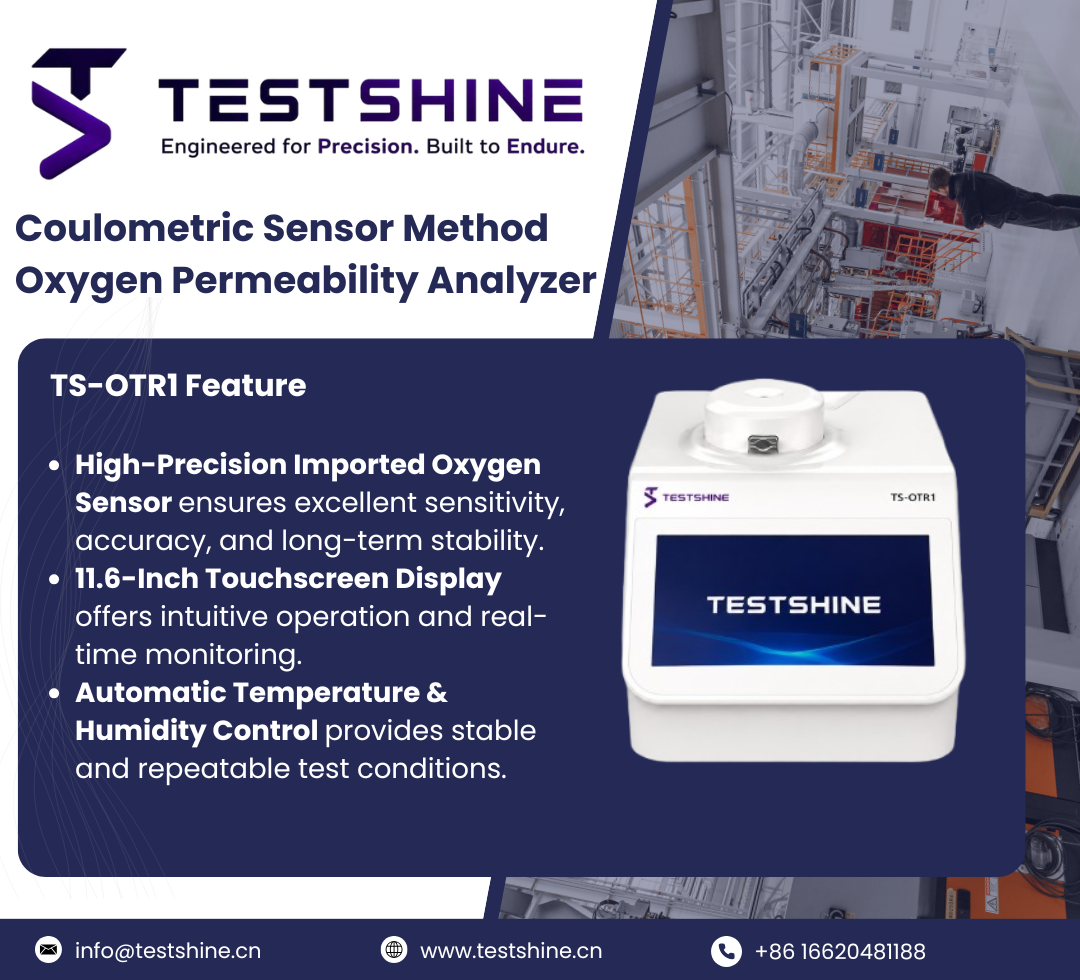
The TS-OTR1 Oxygen Permeability Analyzer is designed for oxygen transmission rate (OTR) testing of films, packaging, and barrier materials using coulometric sensor technology.
Why it fits the OTR testing workflow described above:
- Coulometric oxygen sensor: A high sensitivity coulometric oxygen sensor supports stable, long term measurement.
- Wide barrier range: Covers materials with high, medium, and low oxygen barrier properties, with a measurement range of 0.01 - 1000 cm³/(m²·24h·0.1MPa).
- Automated temperature and humidity control: Temperature and humidity control (15°C - 45°C, 0 - 100% RH) supports repeatable test conditions.
- Intelligent, automated testing: A touchscreen interface supports real time monitoring, automated testing, and data analysis.
- Broad application coverage: Suited to flexible packaging and plastic films, pharmaceutical and medical packaging, paper, composite and barrier materials, and containers and packaging research.
The TS-OTR1 is designed for packaging testing laboratories that need repeatable oxygen transmission rate data across a wide range of materials and applications.
References
-
ASTM International, "ASTM D3985-24 — Standard Test Method for Oxygen Gas Transmission Rate Through Plastic Film and Sheeting Using a Coulometric Sensor," 2024. https://store.astm.org/d3985-24.html
-
Dey, A.; Neogi, S., "Oxygen scavengers for food packaging applications: A review," Trends in Food Science & Technology, 2019. https://www.sciencedirect.com/science/article/abs/pii/S0924224418305818
-
Institute of Food Technologists, "Modified Atmosphere Packaging Expands," Food Technology Magazine. https://www.ift.org/food-technology-magazine/modified-atmosphere-packaging-expands
-
Fraunhofer Institute for Process Engineering and Packaging IVV, "The shelf life of most packaged foods is affected by oxygen." https://www.food.fraunhofer.de/en/beispiele12/Verarbeitung/lebensmittel_undsauerstoff.html
-
United States Pharmacopeia, "<671> Containers, Performance Testing," USP-NF. https://doi.usp.org/USPNF/USPNF_M99430_03_01.html
-
ASTM International, "ASTM F1927-20 — Standard Test Method for Determination of Oxygen Gas Transmission Rate, Permeability and Permeance at Controlled Relative Humidity Through Barrier Materials Using a Coulometric Detector," 2020. https://www.astm.org/Standards/F1927.htm
-
ASTM International, "ASTM F1307-20 — Standard Test Method for Oxygen Transmission Rate Through Dry Packages Using a Coulometric Sensor," 2020. https://store.astm.org/f1307-20.html
-
International Organization for Standardization, "ISO 15105-2:2025 — Plastics film and sheeting — Determination of gas-transmission rate — Part 2: Equal-pressure method," 2025 (replaces ISO 15105-2:2003). https://www.iso.org/standard/91001.html
-
ASTM International, "ASTM F2622-20 — Standard Test Method for Oxygen Gas Transmission Rate Through Plastic Film and Sheeting Using Various Sensors," 2020. https://store.astm.org/f2622-20.html
-
Larsen, H.; Kohler, A.; Magnus, E. M., "Ambient oxygen ingress rate method, an alternative method to Ox-Tran for measuring oxygen transmission rate of whole packages," Packaging Technology and Science, 13(6):233-241, 2000. DOI: 10.1002/pts.519
-
Mokwena, K. Khanah; Tang, Juming, "Ethylene Vinyl Alcohol: A Review of Barrier Properties for Packaging Shelf Stable Foods," Critical Reviews in Food Science and Nutrition, 52(7):640-650, 2012. DOI: 10.1080/10408398.2010.504903 https://pubmed.ncbi.nlm.nih.gov/22530715/
-
ASTM International, "ASTM D1434-23 — Standard Test Method for Determining Gas Permeability Characteristics of Plastic Film and Sheeting," 2023. https://webstore.ansi.org/standards/astm/astmd143423
-
Hua, Qi; Huang, Zhixin; Gou, Jinsheng; Zhang, Huaiyu; Therrien, Isabella; Wu, Jie; Liang, Yalan; Renneckar, Scott, "Harnessing the synergistic power of lignin-Ecoflex blends for enhanced performance in food packaging," Chemical Engineering Journal, 499:156139, November 2024. DOI: 10.1016/j.cej.2024.156139