Differential Scanning Calorimeter
Differential Scanning Calorimeter
 1 / 3
1 / 3Differential Scanning Calorimeter
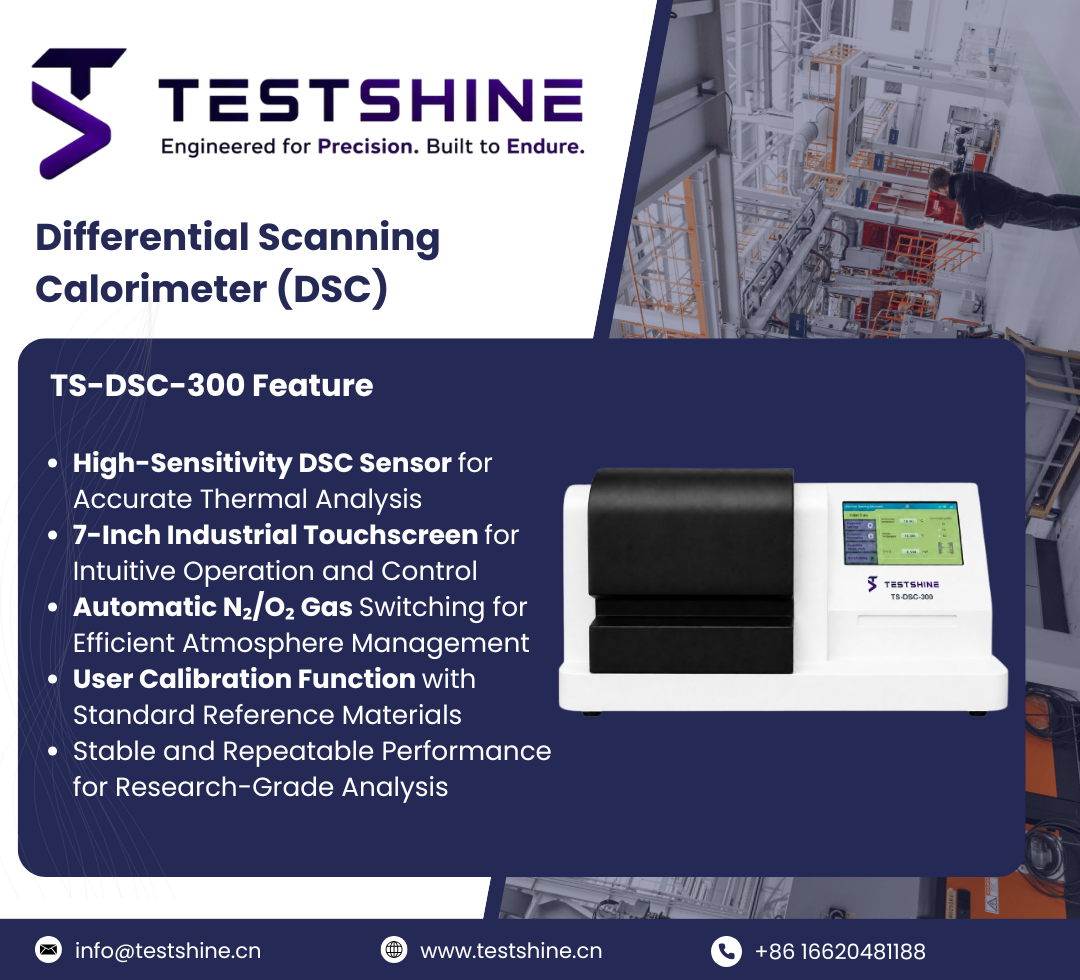
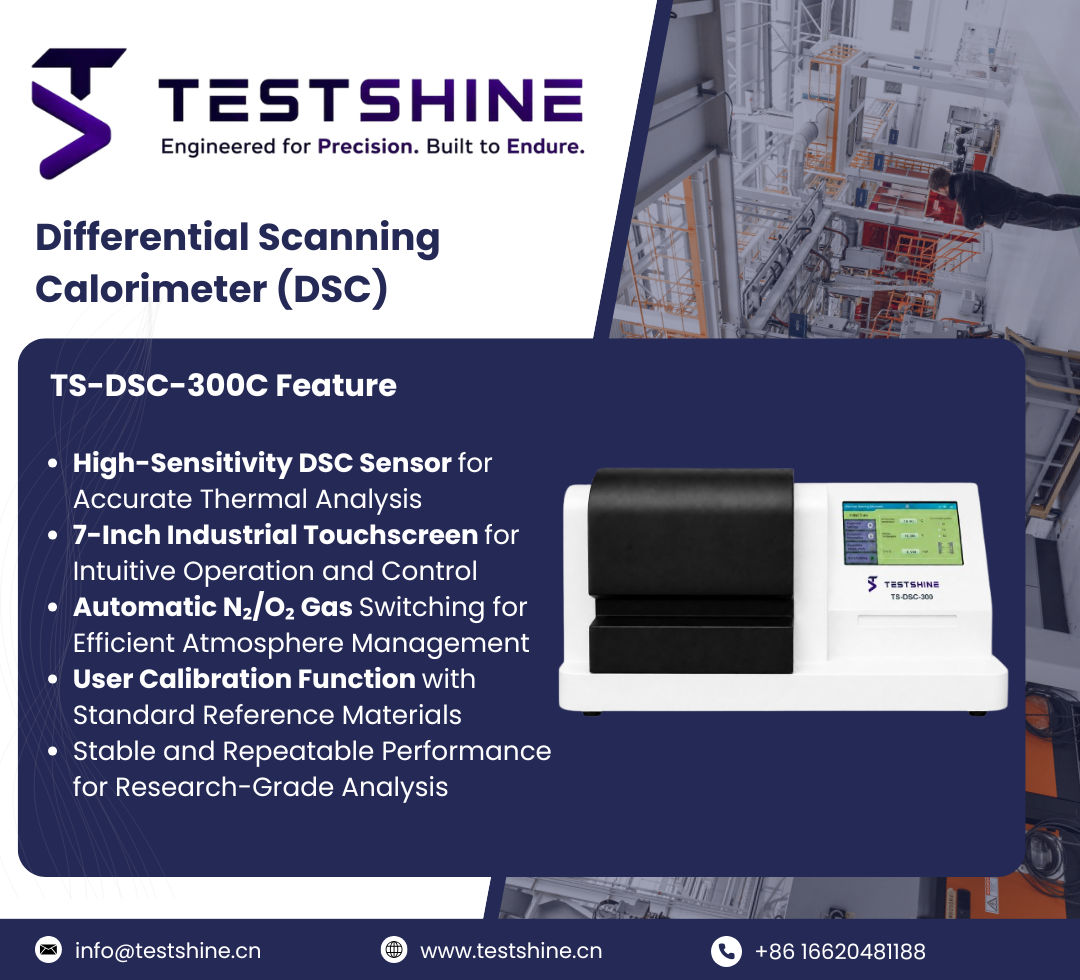
The TS-DSC-100A Differential Scanning Calorimeter delivers precise heat flow measurements for accurate thermal analysis, enabling reliable characterization of material transitions during controlled heating and cooling.
Key Specifications
Temperature Range
RT–600°C
Heating Rate
0.1–100°C/min
DSC Resolution
0.01 µW
Gas Control
Auto N₂/O₂ Switching
Global Shipping
50+ countries
2-Year Warranty
Parts & service
Expert Support
Dedicated team
Have a question about this instrument?
Talk to an expertProduct Introduction
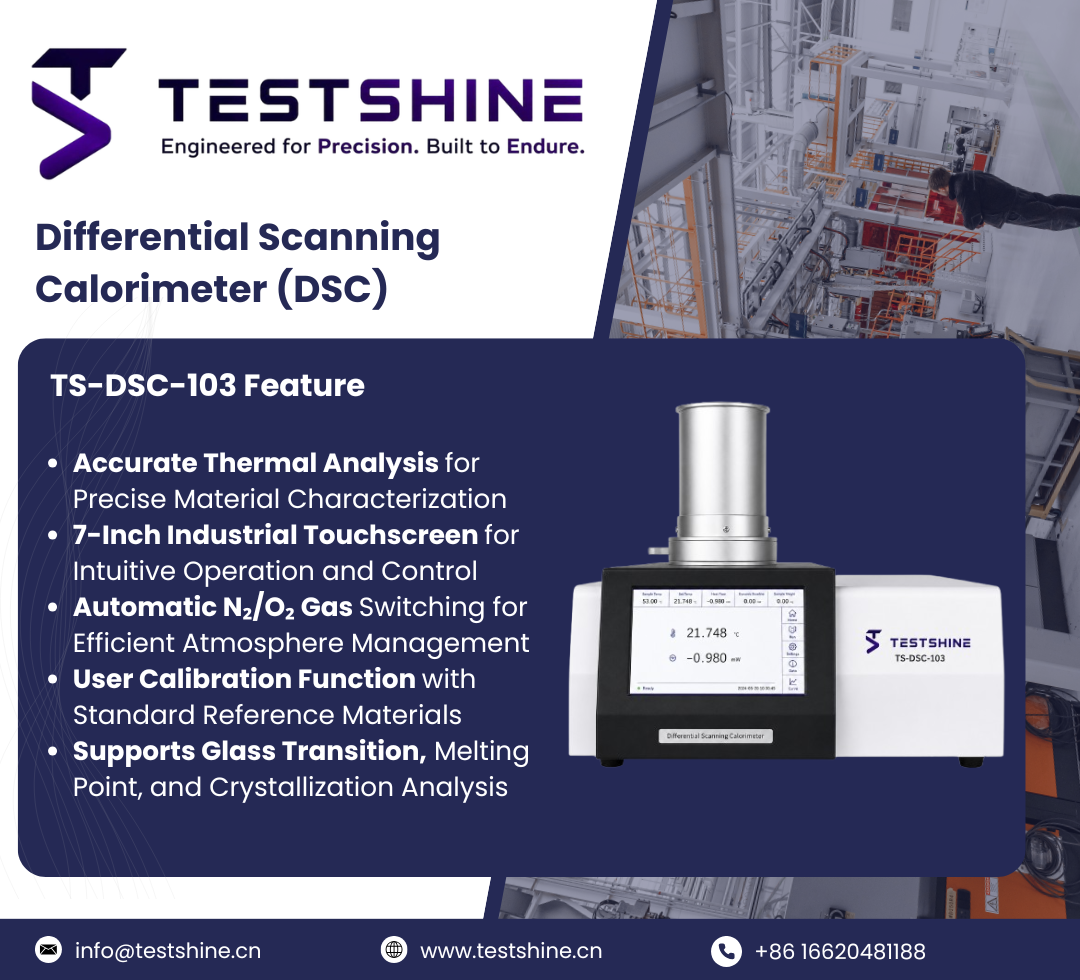
TS-DSC-103 Differential Scanning Calorimeter (TS-DSC) measures the variation in temperature difference (thermal flux) between a sample and a reference as a function of temperature or time. Both the sample and reference are maintained under identical temperature conditions within the same thermal environment.
When no thermal event occurs, the sample and reference follow the programmed temperature profile at the same rate. During a thermal transition, such as melting, the sample absorbs or releases heat, causing a temperature difference between the sample and reference.
This temperature difference is continuously monitored and recorded throughout the analysis. The resulting DSC curve provides information about the thermal behavior of the material and serves as the basis for interpreting thermal transitions.
Key Features
- High-Sensitivity Heat Flow Detection for accurate analysis of subtle thermal transitions and material behavior.
- Excellent Temperature Accuracy and Repeatability, ensuring reliable and reproducible test results.
- Wide Temperature Measurement Range to support diverse thermal analysis applications across multiple industries.
- User-Friendly Touchscreen Interface for intuitive operation and streamlined workflow.
Technical Parameters
| Instrument Type | Differential Scanning Calorimeter (TS-DSC) |
| Temperature Range | -40°C to 600°C |
| Temperature Resolution | 0.001°C |
| Temperature Fluctuation | ±0.01°C |
| Temperature Repeatability | ±0.01°C |
| Heating Rate | 0.1 to 100°C/min |
| Isothermal Holding Time | Programmable, up to 24 hours |
| Temperature Control Mode | Automatic program control for heating, isothermal holding, and cooling |
| DSC Measurement Range | 0 to ±800 mW |
| DSC Resolution | 0.01 μW |
| DSC Sensitivity | 0.001 mW |
| Power Supply | AC 220V, 50Hz (customized options available) |
| Atmosphere Control Gas | Nitrogen (N₂), Oxygen (O₂) with automatic program-controlled switching |
| Gas Flow Rate | 0–200 mL/min |
| Gas Pressure | ≤0.5 MPa |
| Display | 7-inch LCD Touchscreen, 24-bit Color Display |
| Calibration Standard | Supplied with certified reference materials (Indium and Tin) for user temperature calibration |
| Data Interface | Standard USB Interface |
| Temperature Monitoring System | Multiple thermocouple configuration for sample temperature, furnace temperature, and internal ambient temperature measurement |
Applications
Analysis of Typical Test Cases
The TS-DSC-103 Differential Scanning Calorimeter provides precise thermal characterization of materials by continuously measuring heat flow associated with physical and chemical transitions. Through analyses such as glass transition determination, melting point evaluation, crystallization studies, enthalpy measurement, and curing behavior characterization, the instrument delivers valuable information regarding material stability, thermal performance, and phase transition behavior. These capabilities make the TS-DSC-103 an essential analytical tool for material development, quality assurance, process optimization, and research applications.
Aluminum Melting Point Analysis
This test uses Differential Scanning Calorimetry (DSC) to determine the melting behavior of a standard aluminum sample. During heating, the instrument measures the heat absorbed by the material as it transitions from a solid state to a liquid state, allowing the determination of melting point and enthalpy.